
Swedish Spelt Pepparkakor
Swedish spelt pepparkakor are my spin on the traditional gingerbread. Whether baked thin and crisp or slightly thicker for decorating, they bring warm, spicy flavour to the kitchen.
In this post, you’ll learn about traditional shapes, how thickness and baking time affect texture, decoration ideas, and creative ways to use any leftovers.
|
|
| My Swedish pepparkakor |
| Traditional Swedish pepparkakor |
| Quick tips for baking pepparkakor |
| Decorating your pepparkakor |
| Ways to use leftover pepparkakor |
| More Christmas recipes |

My Swedish pepparkakor
Making pepparkakor in the run up to Christmas is a national institution here in Sweden. Families gather together to make and decorate the fragrant cookies, and for my own kids, it was a time of happiness. My kids’ paternal grandmother (farmor) was the pepparkakor queen, and she would make large, decorated hearts. The first time she gave me one, I ate it, not realising that I was supposed to hang up it. I just thought the hole at the top with a pretty ribbon through it was part of its charm. I mean, come on. A fresh, gigantic homemade gingerbread cookie? Who can blame me?
This recipe is hers. I have no idea where it came from originally, but it’s very likely it was the recipe used by her mum and grandmother. Even though I started to make my own batches each year, my kids would still go to farmor’s house and bake up a storm, even when they were no longer quite so little. I think they enjoyed it as much as she did. There were always large hearts with their names on to be hung up as decoration, with smaller cookies for us all to eat.
The dough is simple and easy to prepare, but does need a good 24 hours to rest in the fridge. Don’t skimp on this time as it allows all of the spices and sweetness to mingle. Alongside the ginger, pepparkakor has cinnamon and cardamom to ramp up the spiciness, giving them the traditional, well-loved gingerbread cookie hit.
It’s a fairly big batch recipe and will produce around 60 cookies, depending on size. Cut out any shape you like and freeze what you don’t eat.
Traditional Swedish pepparkakor
Traditional pepparkakor have been around since at least the 14th century, when gingerbread was first mentioned in Swedish written records. At that time, they were baked in monasteries and believed to have medicinal properties. By the 15th and 16th centuries, pepparkakor had become more common in households, especially around Christmas, although the recipes were far spicier than today.
The most classic Swedish shapes have always been round biscuits and hearts. The heart shape became especially popular in the 18th and 19th centuries, symbolising warmth, love, and generosity during the festive season. This is why heart-shaped pepparkakor still hang in windows, on Christmas trees, and in bakeries all over Sweden.
The gingerbread “man” is not actually a Swedish tradition. Gingerbread people became widespread much later, heavily influenced by British and American baking culture in the late 19th and early 20th centuries. In Sweden, the heart has remained the iconic shape, with stars, goats, pigs, and other figures appearing later as cutters became cheaper and more accessible.
Today, you will find all sorts of shapes in Swedish kitchens, but the round biscuit and the heart remain the most traditionally Swedish forms of pepparkakor.
Quick tips for baking pepparkakor
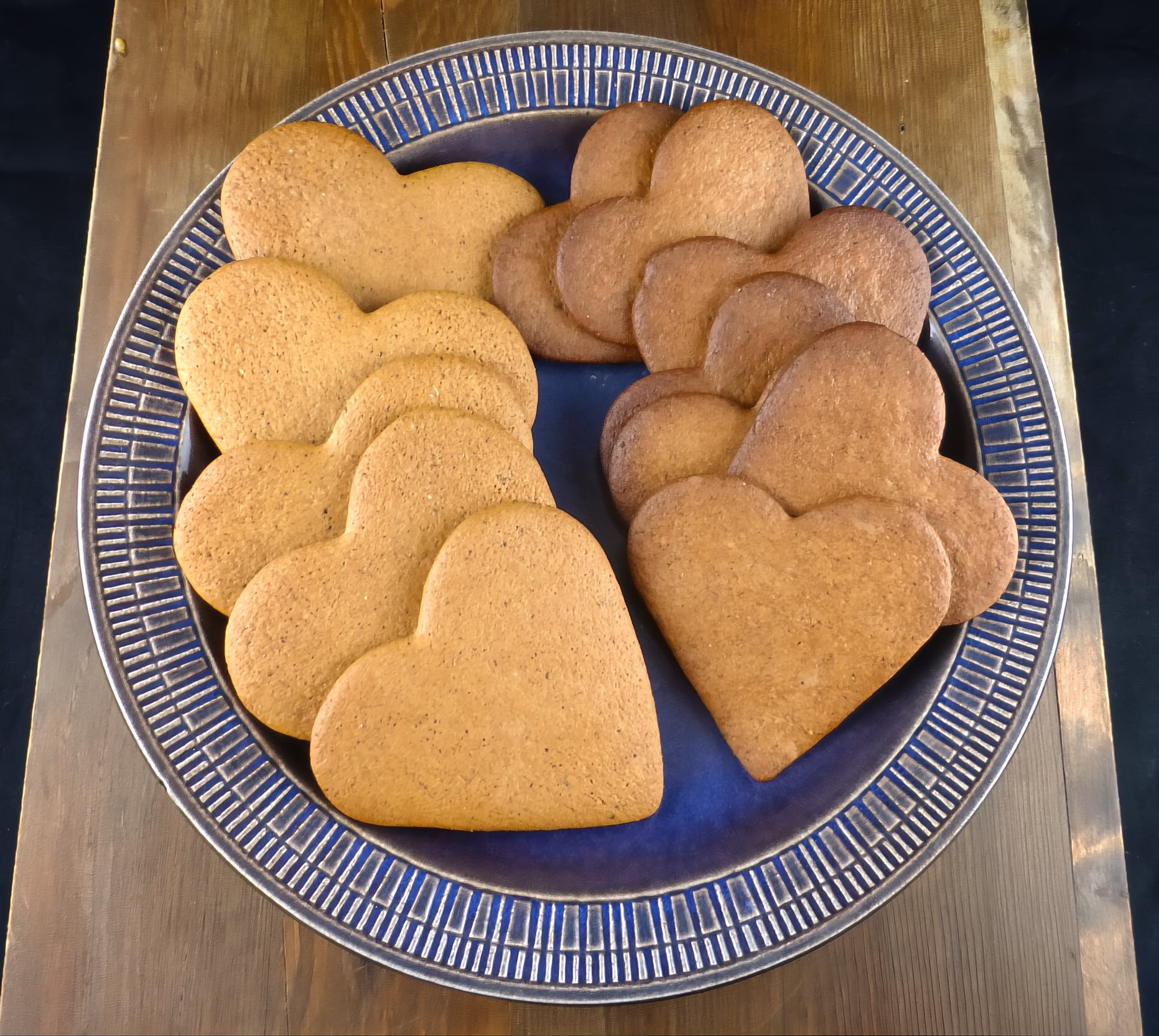
I wanted to show how much the thickness of the dough and the baking time can change both the texture and the appearance of pepparkakor. In the picture below, it may look as though two different cutters were used, but they were the same. The only difference is how thinly the dough was rolled and how long each cookie was baked.
For the classic Swedish style, roll the dough very thin. This gives you the crisp, delicate texture you find in shop-bought pepparkakor. Thin cookies bake quickly, so keep an eye on them, as just a minute can make a noticeable difference.
If you prefer a softer cookie, roll the dough a little thicker. These stay tender in the centre with lightly crisp edges. Thicker cookies also hold their shape better, which works well if you plan to decorate them.
Baking time also affects the final texture. A shorter bake keeps the cookies soft, while a longer bake results in a much crispier finish. With thin dough, even a small change in time can shift the texture quite dramatically.
Try a mix of thicknesses and baking times to see which texture you prefer. It’s a simple way to find your perfect version of pepparkakor.
Decorating your pepparkakor
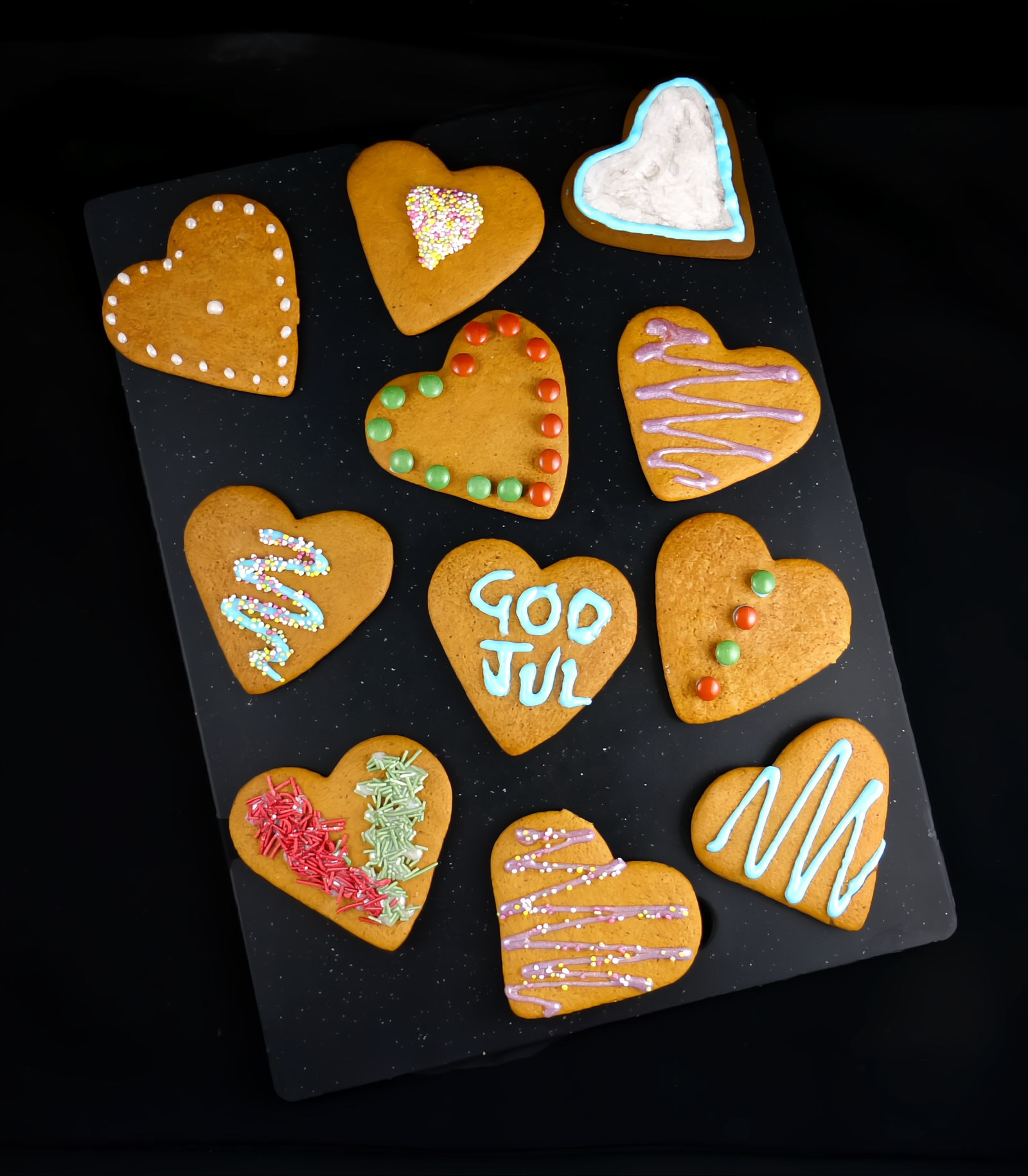
When my kids made gingerbread with farmor, they would make large hearts and frost their names on them. They often tied a ribbon through the top so they could hang them as decorations. It’s such a sweet tradition and very Swedish.
There are lots of ways to decorate them. Royal icing is the most traditional, but you can also use ready-made icing tubes, sprinkles, sugar pearls, crushed peppermint, or even melted chocolate drizzles. If you want a Scandinavian look, keep it simple with clean white icing lines. If you prefer something more fun, add coloured sprinkles and little sweets.
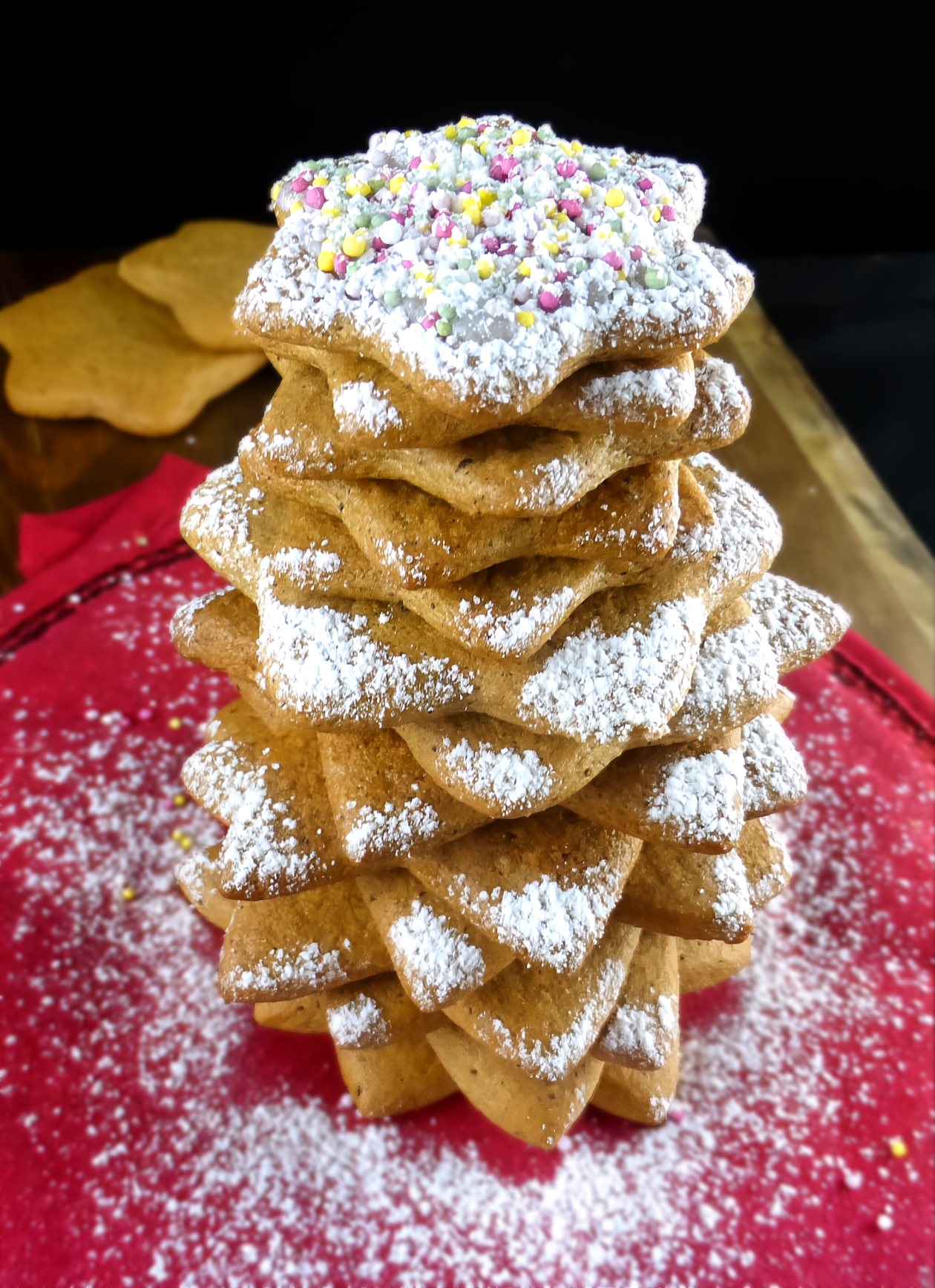
You can cut the dough into any shapes you like. For the Christmas tree below, all you need are several star-shaped cutters in different sizes. Once baked, stack them on top of each other to create a little tree. It’s festive and very pretty. You don’t even need to eat it. It makes a lovely centrepiece for your Christmas table.
Next year, I think I might try making my own gingerbread house. We’ll see.
Creative ways to use leftover pepparkakor
If you find yourself with more gingerbread biscuits than you can finish, or you simply fancy trying something new, there are lots of delicious ways to turn them into something special.
- Gingerbread chocolate truffles: Mix finely crushed pepparkakor with cream cheese until the mixture comes together, roll into small balls, and dip them in melted chocolate. They set into rich, festive little truffles.
- Make a cheesecake base: Crushed pepparkakor make a wonderful crust for Christmas cheesecakes. They go especially well with white chocolate and mascarpone fillings.
- Mix them into a Christmas rocky road: Break the biscuits into chunks and stir them through melted chocolate along with marshmallows, dried fruit, or nuts.
- Add them to homemade honeycomb: Stir gingerbread crumbs into warm honeycomb before it cools, then coat it in chocolate for a seasonal twist.
- Layer them into a dessert: Build a quick gingerbread “tiramisu” by layering crushed cookies with mascarpone and a drizzle of coffee or orange syrup.
- Fold them into ice cream: Mix small pieces into vanilla ice cream for an instant Christmas ice cream.
- Use them as a breakfast topping: Scatter crushed gingerbread over porridge or yoghurt and finish with maple syrup for a cosy winter breakfast.
- Stir them into whipped cream: Blitz the cookies into a fine crumb and fold them into softly whipped cream for a simple gingerbread mousse.
These ideas make it easy to use every leftover gingerbread cookie!

Swedish saffron skorpor (biscotti)
Saffron and cranberry cupcakes
Swedish Spelt Pepparkakor (Gingerbread Cookies)
Ingredients
- 170g (¾ cup) sugar
- 100ml (⅖ cup) light syrup (see note 1)
- 100ml (⅖ cup) water
- 1 tbsp cinnamon
- ½ tbsp cardamom
- ½ tbsp powdered cloves
- ½ tbsp ginger
- 125g (½ cup + 1 tbsp) butter (chopped)
- ½ tbsp bicarbonate (baking) soda
- 425-450g (3½ cups - 3¾ cups) spelt flour (see note 2)
Decoration
- frosting / icing (see note 6)
- sprinkles (or whatever else you like)
Instructions
Basic Gingerbread Dough (for approx. 60-70 cookies) - see note 3
- Add the sugar, syrup and water to a pan and heat the ingredients until they start to bubble. Remove from the heat and allow to cool for a while.
- Mix the spices together and along with the butter, add to the pan. Stir gently until the butter has melted.
- Sift 425g (3½ cups) of the flour and baking soda together.
- Add to the wet ingredients, stirring until a fairly sticky dough forms. If you need more flour, just add a little at a time. The dough firms up when chilled, so don't add too much. The dough will be sticky, but you should be able to mould it together with your hands.
- Form into a rough ball, cover with clingfilm (or place in a plastic bag) and leave in the fridge for at least 24 hours.
- When you are ready to bake, pre-heat the oven to 200°C (400F).
- Line one or two large baking trays with baking paper.
- Divide the dough into three or four bits (it's easier to work with the dough in smaller quantities) and liberally sprinkle your surface with flour. See underneath for how you can use the dough:
Christmas Tree:
- You will need star cutters of various sizes (I had three different sizes).
- Roll out the dough to around ½ cm (just under ¼") thickness, and cut out as many stars as you need.
- Place on your baking tray(s).
- Bake for around 4-9 minutes, until golden brown. Please note: I baked separate batches with the different sizes (as it was easier this way). You can combine them on one baking tray, but you will need to watch them carefully, as the small ones will bake much faster (see note 5)
- When cooled completely, assemble the larger ones first (staggered, with the stars' points at different angles), graduating to the smaller ones on top.
- When you're happy with your placement of the cookies, dab a little icing or chocolate on top of each cookie to keep them in place.
- Sprinkle liberally with icing sugar or decorate however you prefer.
Traditional Swedish Pepparkakor (very thin) - see note 4
- Roll out the dough as thin as you can get it (you may need to do this on baking paper).
- Using a medium sized heart-shaped cutter, cut out the cookies and place on the prepared baking tray.
- These will bake incredibly fast, so keep an eye on them (start checking at around four minutes) (see note 5)
Thicker Pepparkakor (softer) - see note 4
- Roll the dough out to about ½ cm (just under ¼"). Use any cutter you like. Place on the prepared tray(s). Bake as long as needed (see note 5)
- Decorate your cookies however you fancy and store them in an airtight container (please note: they will get softer over time).
Notes
- You can use any kind of light syrup. If you are in the UK, you could use golden syrup.
- You can use both regular and spelt flour in this recipe. Just use the same amount of ingredients for both.
- This is for a basic pepparkakor (gingerbread) dough. I've included ideas for what to do with it, but you can use it any way you like.
- I used the same heart-shaped cutter for both of my heart cookies. The reason why they look so different is because of their thickness and how long they were baked for.
- The baking times will vary depending on size and thickness. The usual baking time is anywhere from 4-9 minutes, so you will need to keep a very close eye on them (especially if they are small and/or thin). There is about 30 seconds difference between deep golden brown, crunchy cookies, and burnt ones. If you prefer your gingerbread softer, bake for less time.
- I haven't included a recipe for the icing, but you can find one for royal icing in my main post. Alternatively, you can buy some (or omit it altogether).


3 thoughts on “Swedish Spelt Pepparkakor”