
Cheddar Cheese and Garlic Spelt Bread
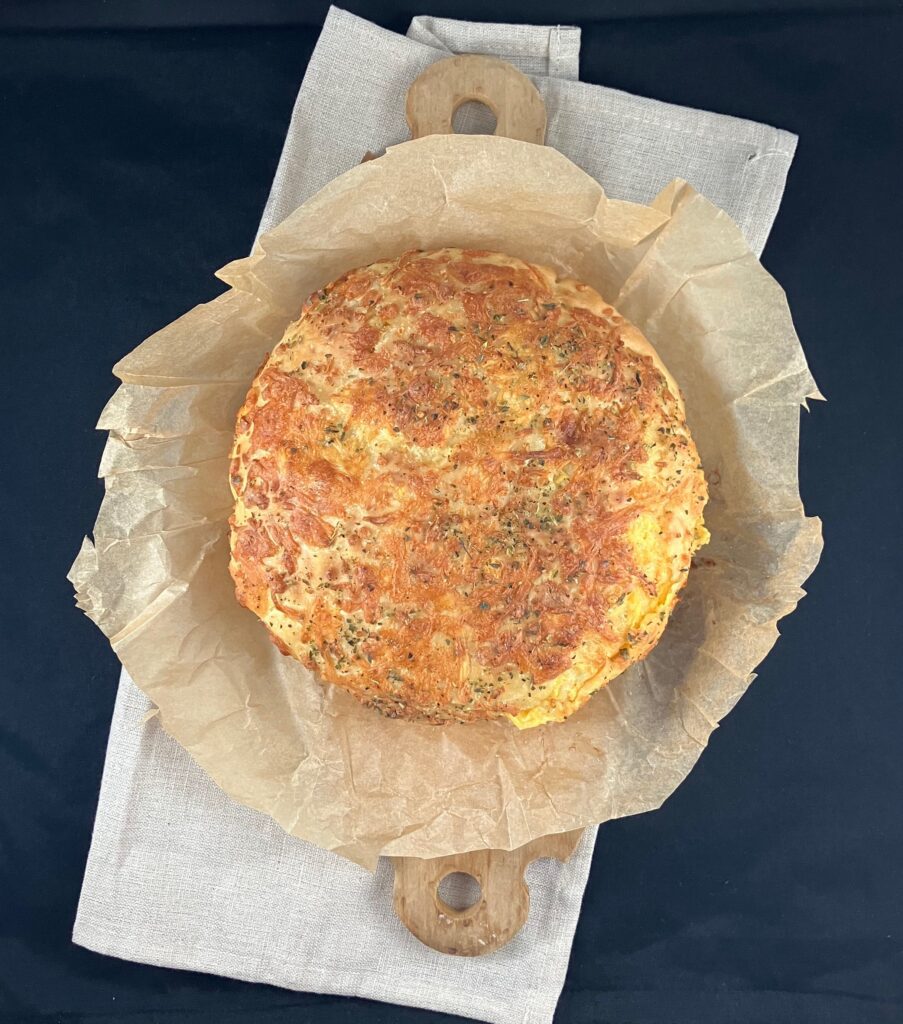
Soft, enriched spelt dough wrapped around sharp, melty cheddar and fragrant garlic, baked into a golden, round loaf. Perfect for sandwiches, dunking into soups, or simply tearing apart warm from the oven.
In this post, I’ll walk you through the dough, the shaping, and the baking, with tips on handling enriched spelt dough and making sure your cheese stays inside. Plus, there are serving suggestions, storage advice, and a few ideas for swapping ingredients to suit your pantry.
If you are new to spelt flour and would like to know more, please check out my tutorial: The Beginner’s Guide to Spelt Flour.
|
|
| My cheddar and garlic spelt bread |
| Why this dough works so well |
| Shaping and the pan |
| A perfect pairing |
| Serving and storing |
| More enriched spelt bread recipes |

My cheddar and garlic spelt bread
I decided to make this cheddar and garlic spelt bread on a whim. Which, in my experience, is when the best recipes happen. When I overthink things, they tend to fail spectacularly, so I’ve learned to trust an impulse bake or two.
I was making a creamy pasta for dinner and wanted some bread to go with it. I also had plenty of cheese to use up: Lidl had an English week recently, and classic Cheddar was on sale, so of course I stocked up while I could. This bread turned out to be the perfect partner for soaking up all that delicious sauce.
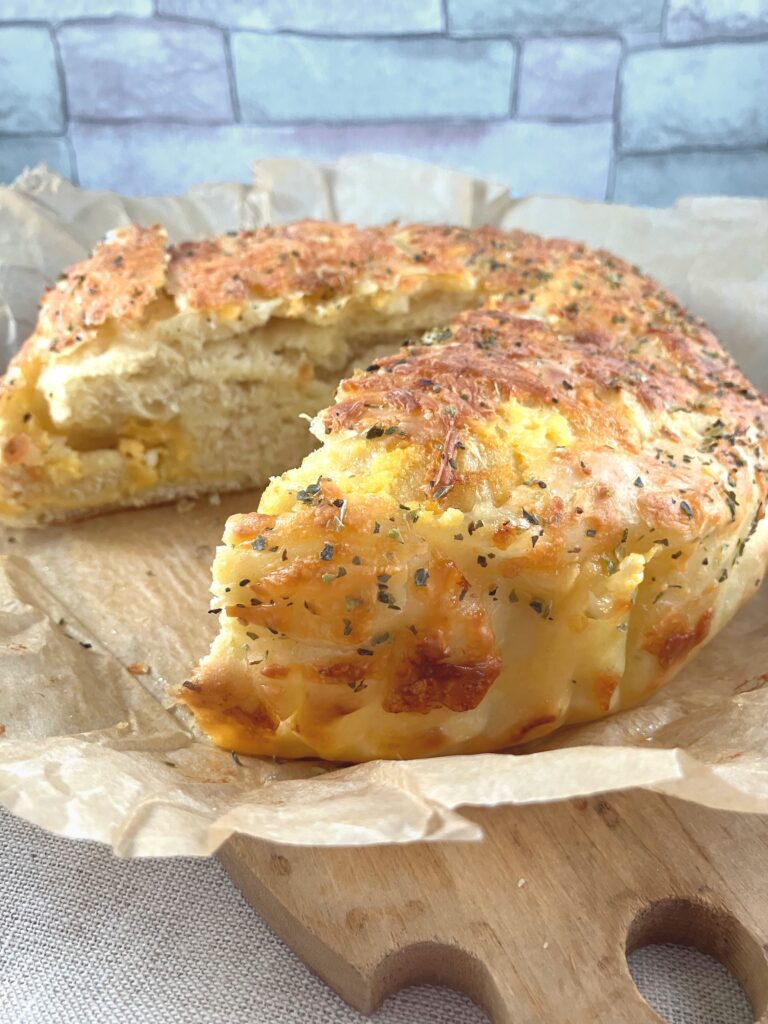
The finished loaf is unbelievably soft and bouncy, with a strong cheddar flavour running all the way through. Every time I make a new bread it becomes my favourite. And while I am aware I once said that about my Monterey Jack focaccia, I think there’s a new king in town.
Why this dough works so well
This bread is made with an enriched spelt dough, this time, with milk, butter, and egg. These ingredients give the dough a softer texture, a richer flavour, and a tender, pillowy crumb. Ideal for a filled loaf like this one. The added fat and protein also help support spelt’s delicate gluten, making the dough more stable during shaping and baking than a lean spelt dough.
Like most enriched spelt doughs, it does have its quirks. The milk, butter, and egg slow fermentation, so the dough often needs longer proofing times to rise fully. It can feel very soft or sticky at first, and if rushed, it’s more likely to bake unevenly or burst in the oven. Watching the dough rather than the clock is key here.
I cover these behaviours in much more detail, including proofing, shaping, and common pitfalls, in my post Enriched Spelt Loaves: Tips, Troubleshooting & What to Expect, if you’d like a deeper dive.
Shaping and the pan
This dough is shaped by enclosing the cheese inside, rather than layering or rolling it. Placing the filling in the centre and gently pulling the dough up and over it, helps create an even thickness all the way around. This is especially important when working with spelt’s softer gluten. Taking your time here makes a real difference to how evenly the loaf bakes.
Once shaped, the dough is turned seam-side down and gently rolled out again before being transferred to the pan. Baking it in a pan provides extra support, helping the dough hold its shape as it rises and preventing it from spreading or bursting along the seams. This is particularly helpful for filled breads, where the weight of the cheese can otherwise cause weak spots.
The pan also encourages a more controlled rise and a softer crust, while keeping all that garlicky, cheesy goodness neatly inside the loaf.
Garlic and cheese: a perfect pairing
Garlic and cheese are a classic pairing for good reason. Sharp cheddar brings depth and savouriness, while garlic adds warmth and just the right amount of punch. Together, they melt beautifully into the dough, creating a rich, comforting flavour that works especially well with soft, enriched spelt bread.
This filling is also very adaptable, depending on what you have on hand or the kind of flavour you’re after. For a milder loaf, mozzarella on its own or mixed with a little cheddar gives a soft, creamy result. For something a bit more robust, try an extra mature cheddar, Gruyère, or a blend of cheddar and Parmesan for extra savouriness. Avoid very dry cheeses like aged Parmesan on its own, or overly wet cheeses, as they can dry out the bread or make it soggy.
You can also play with herbs to change the character of the bread. Oregano, thyme, or rosemary add a more aromatic, savoury note, while keeping the garlic subtle makes the loaf gentler and more versatile. If you’re in the mood for something bolder, simply increase the garlic or add a pinch of chilli flakes or black pepper.
Serving and storing your cheddar & garlic loaf
This round loaf is versatile and delicious, perfect for a variety of meals. Slice it for hearty sandwiches. Think burgers, tuna and red onion, or classic egg mayonnaise. It’s also excellent for dunking into soups and stews, soaking up every last drop of sauce or gravy. And don’t forget breakfast: toasted slices with butter, jam, or even a fried egg make for a comforting start to the day.
If you’re not planning to eat the whole loaf immediately, spelt bread tends to stale faster than store-bought bread. I always freeze any leftover loaf. Wrapped tightly in baking paper or cling film and placed in a freezer bag, it defrosts beautifully and tastes just as good as the day it was baked.
When you’re ready to enjoy it, simply thaw at room temperature for a couple of hours, or warm gently in the oven. Freezing is a simple way to ensure your loaf stays soft, tender, and utterly delicious without rushing through it all in one go.

Spelt Cheese and Garlic Bread
Ingredients
Dough (see notes 1 & 5)
- 250ml (1 cup) milk
- 50g (3½ tbsp) butter (chopped into small pieces)
- 1 egg
- 360-480g (3-4 cups) spelt flour (see note 2)
- 7g (2¼ tsp) dried yeast (see note 3)
- ½ tbsp sugar
- 1 tsp salt
Filling (for one loaf ONLY):
- 20g (1 tbsp + 1 tsp) butter
- 10g (3½ tsp) minced garlic (see note 4)
- 175g (6¼ oz) grated strong cheese (I used cheddar)
- mozarella (sprinkling)
- 1 teaspoon sea salt
- 1 teaspoon oregano
Instructions
Please note: the ingredients will make two loaves of bread (see note 5)
- Gently heat the milk in the microwave until just lukewarm (around 37–40°C / 100–105°F). Stir in the butter (it will soften nicely).
- Add the milk and butter mixture to your stand mixer bowl along with the egg. Work together until everything is well mixed.
- Then add 360g (3 cups) of flour along with the remaining ingredients. Mix until combined.
- Gradually add extra flour as needed one tablespoon at a time, allowing it to incorporate fully before adding more. You may not need the full amount stated, or you could need more. Be careful not to add too much, as this will make the bread dense.
- After a few minutes, the dough will start to pull away from the sides of the bowl. You may notice your machine working a little harder (mine starts to make a clumping sound). The dough will still be sticky and will slip easily from the paddle.
- Using a spatula, scrape the dough from the paddle. Add a little more flour and continue kneading until the dough pulls completely away from the sides of the bowl and most of the bottom. It will no longer drip from the paddle but should come away easily when pulled. The dough should feel tacky, but not stick to your fingers.
- Cover the dough and leave it to proof in a warm place until it has doubled in size, usually 60–90 minutes.
- Knock back the dough on a lightly floured surface and form it into a rough ball.
- When the dough is ready, divide into two (see note 5)
- Grease and/or line a fairly large (at least 20cm / 7¾") round dish or pan.
- Take one piece, and turn it out on a floured surface. Roll the dough into a rough circle of around 30cm / 12" in diameter, and 1cm thick.
- Warm the butter in the microwave until it is just melted, and stir in the garlic. Brush it over the dough, covering the whole surface.
- Place the cheese in the middle of the dough circle, leaving a generous border of dough. Carefully pull the edges up and over the cheese, stretching the dough just enough so it meets in the centre and fully encloses the filling.
- Pinch the dough together lightly to seal, then turn it over so the seam is underneath.
- Turn the dough over, with the smooth surface on the top, and roll it out very carefully until it is around 18cm / 7" in diameter and 2-3cm / ¾-1¼" thick.
- Pre-heat the oven to 200℃ (400℉).
- Place in the prepared pan and sprinkle over some mozzarella, salt and oregano. Cover with a tea towel and leave for around 30 minutes to rest.
- Bake in the lower part of the oven for around 20 minutes, just until the top is a lovely golden brown.
- Leave to cool in the pan, and then serve warm with your favorite dinner. Enjoy!
Notes
- I have made the dough using both a stand mixer and bread machine with identical results. I have not made the dough by hand, but I see no reason why you couldn't do so!
- You can use spelt or regular flour for this recipe (just use the same amount).
- In Sweden we have something called dried yeast. It is used both in warm liquid to proof and also added directly to flour. I am aware that the US has two options for dried yeast, and I believe instant yeast is the most similar to our dried yeast.
- I used shop bought ready minced garlic. However, if you would like to prepare your own, you would need 3-4 cloves, based on personal preference.
- The ingredients will make two loaves of bread. I usually only make one and freeze the remaining dough for another time. If you would like to make two loaves in one go, just repeat the instructions for both loaves.


4 thoughts on “Cheddar Cheese and Garlic Spelt Bread”