
Traditional Spelt Shortbread
This spelt shortbread is so easy to make, uses only 4 simple ingredients, and tastes amazing. Crumbly, buttery, thick cookies perfect for dunking in your tea and ready to eat in less than an hour.
The recipe can be adapted to use all-purpose (plain) flour as a substitute for spelt flour.
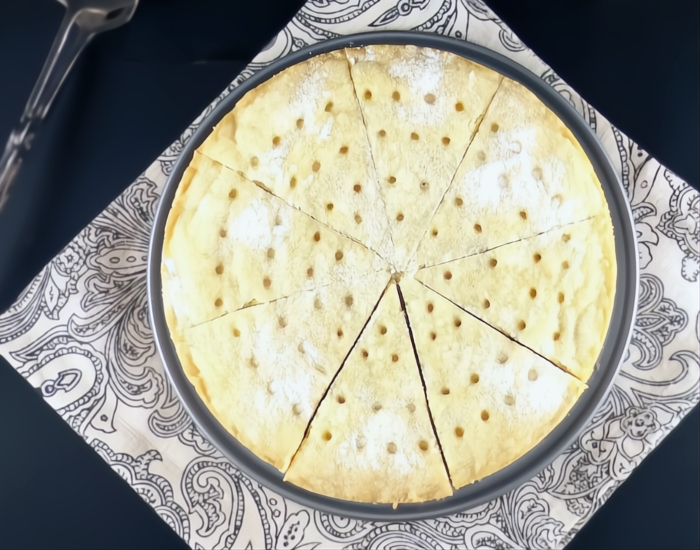

My spelt shortbread
This recipe for traditional shortbread is buttery, chunky and melt in your mouth. Just how shortbread should be. And surprisingly, it needs only four ingredients. The simple method to make them is nothing more difficult than beating together butter and sugar before adding the flours.
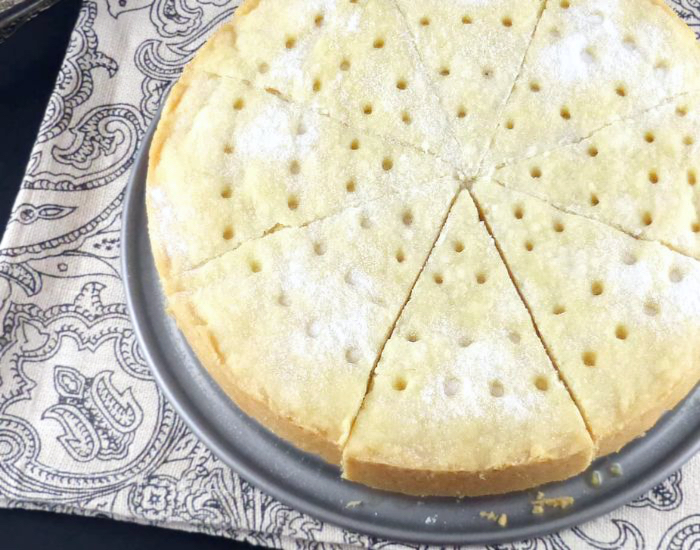
The shortbread is baked in a round springform which produces lovely fan-tailed biscuits when sliced. I think it is particularly nice to make it in a round pan if you are offering it as a Christmas gift. The springform allows the easy removal of the outer edge, which helps when slicing.
The recipe yields 8 chunky biscuits.
The origins of shortbread
Shortbread has been circulating the UK for a long time. Often associated with Scotland in particular, there is evidence to suggest that shortbread was being eaten as early as the 12th century. However, it was Mary, Queen of Scots who royally put shortbread on the map in the 16th century.
In the early days shortbread was, somewhat surprisingly, made with yeast. It was double baked to produce a rusk, which is a crispy biscuit (cookie). The yeast was removed and butter added, and the rest is history.
Shortbread invariably comes in three shapes. The petticoat tail is a round shortbread cut into slices (often crimped at the edges), small round cookies, or chunky oblong shapes. The latter is the most common in the UK.
Shortbread is made from cupboard staples, and unlike most cookies, has no leavening agents whatsoever (baking powder or baking soda).
Although an absolute powerhouse in its own right, shortbread can also be added to other desserts. It makes an amazing crust for cheesecakes, can be added to trifles, and it was the star of the show in my caramel shortbread chocolate bark.
What is rice flour?
Rice flour is simply ground rice. It is usually white rice milled into a soft, powdery flour. Unlike cornstarch or potato starch, which are pure starches extracted from the plant, rice flour contains both starch and a tiny bit of protein.
Rice flour is a classic addition to many traditional shortbread recipes, but it’s also one of those ingredients home bakers don’t always keep in the pantry. The good news? You don’t need to buy rice flour to make great shortbread, but understanding what it does can help you choose the best substitute.
What does rice flour do to shortbread?
Rice flour is naturally fine, light, and low in gluten. When blended with all-purpose flour, it reduces the overall gluten development in the dough. The result is that signature crisp-yet-tender crumble that high-quality shortbread is known for.
Rice flour also helps create a slightly sandy texture and enhances the cookie’s delicate snap. It doesn’t thicken or “gel” the dough the way pure starches do. Instead, rice flour acts more like a lightweight flour: it dries the dough slightly, limits gluten, and adds crispness without making the cookie feel chalky or gummy.This is why many traditional Scottish recipes call for it.
Substitute the rice flour for cornstarch
You don’t need to go to the expense of buying something you might never use again. The recipe calls for 25g rice flour (roughly 3 tablespoons), but if you don’t have rice flour on hand, you have several pantry-friendly options that deliver a similar melt-in-the-mouth texture.
Cornstarch is the most common substitute for rice flour. Cornstarch (called cornflour in the UK), softens the dough and produces a delicate, melt-in-the-mouth crumb. Because cornstarch is more potent than rice flour, using slightly less keeps the dough from becoming too powdery. To substitute, use 20g cornstarch (0.7 oz, about 2 ¼ tablespoons).
Other simple substitutions for rice flour in shortbread
There are several other alternatives if you don’t have rice flour:
- Potato Starch:
Very similar to rice flour in performance, giving light, crisp, clean texture. It is particularly excellent in gluten-free baking. Use a straight, 1:1 substitution for rice flour.
- Tapioca starch (tapioca flour):
Adds tenderness with a touch of elasticity. Best if you prefer a slightly softer, more buttery bite. For the most traditional shortbread texture, combine it with all-purpose flour as the recipe already does. Do a straight, 1:1 substitution.
- Extra flour
The simplest replacement. Your shortbread will be a bit firmer and less sandy, but still absolutely delicious. Just use an additional 25g (about 3 tablespoons) of flour.
Bottom Line: Rice flour is a traditional ingredient that enhances shortbread’s crumbly, buttery texture. However, but you absolutely don’t need to buy it just to make a great batch. Any of the substitutes above will give you beautiful results with ingredients you probably already have in your kitchen.
Does using spelt flour in shortbread make a difference?
The simple answer is: no. If you put two slices of shortbread in front of someone, one made with spelt, the other with regular flour, they would not be able to notice any difference.
As I’ve mentioned many times before, where recipes have regular flour, you can often simply do a straight swap for spelt flour. For me, that is the most wonderful thing about using spelt flour. All that you would expect from regular flour baked goods but without wheat (and the uncomfortable side effects it can bring with it).

Traditional Spelt Shortbread (just 4 ingredients)
Ingredients
- 150g (⅔ cup) unsalted butter (softened)
- 50g (4 tbsp) sugar (extra for sprinkling)
- 175g (1½ cups) spelt flour (see note 1)
- 25g (⅕ cup) rice flour
Instructions
- Pre-heat the oven to 150ºC (302℉).
- Grease a small, round pan. I used an 18cm (7") spring-form, but you could pretty much use any size (and then adjust the baking time accordingly).
- Beat the butter and sugar together until light and fluffy.
- Combine the flours and stir into the butter/sugar, mixing until a dough pulls together. Scrape the last bits together with your hands.
- Press the dough into the prepared pan and push it outwards with your fingers until it covers the whole pan (just the bottom, it doesn't go up the sides).
- Take the back of a spoon and smooth the top until it is even.
- Decorate by pricking the dough all over with a fork.
- Score lines into the dough (almost all the way through), as this will help cut the shortbread later.
- Sprinkle a little sugar over the top.
- Bake for around 30-35 minutes, just until the edges are browning but the rest still looks pale.
- Cool for ten minutes or so. If using a springform pan, remove the edges.
- Cut through the scores you made before baking to give you wedges, but leave the shortbread where it is and don't move it until it is completely cooled. Enjoy!
Notes
- You can use spelt or regular flour for this recipe (just use the same amount).

9 thoughts on “Traditional Spelt Shortbread”
Leave a Reply

Just made these for my friend for Christmas .
I was very concerned about the lack of moisture in the recipe, as I patted the crumbly dough into the pie plates((I doubled the recipe). I live in Canada, weighed out the measurements, thinking I had not added enough butter. Additionally I added a tsp of guar gum.
They turned out great! A huge success, for first time gluten free baking.
Can these be successfully frozen?
Thanks.
They are delicious, aren’t they? So pleased they turned out well for you! I have never frozen them but don’t see why you couldn’t! Oh, and although I am sure you already know, spelt is not gluten free. However, it is so much easier on our tummies!
Hello, are you using whole grain spelt or sifted spelt?
Hi Richard,
Regular white spelt flour. Where I’ve used wholegrain, it is indicated in the recipe.
What could I use instead of the rice flour?
Hi Nicole,
Yes, you can swap the rice flour for cornstarch (cornflour), and it will still make the shortbread tender and crumbly. If you leave it out altogether, the biscuits will be a little firmer and less delicate, but it would still work.
Thank you for this recipe! My mom made this last year and I loved it. I’m excited to try making it myself for a holiday party coming up. I’m assuming the butter is unsalted, is that correct?
Hi Rachel,
So lovely to hear you enjoyed your mum’s shortbread and good luck with trying your own!
Yes, the butter I used was unsalted. It wouldn’t make a lot of difference if it was salted, but a traditional shortbread would have been made with unsalted butter. I will amend the recipe to make this clear!