
Spelt Victoria Sandwich Cake
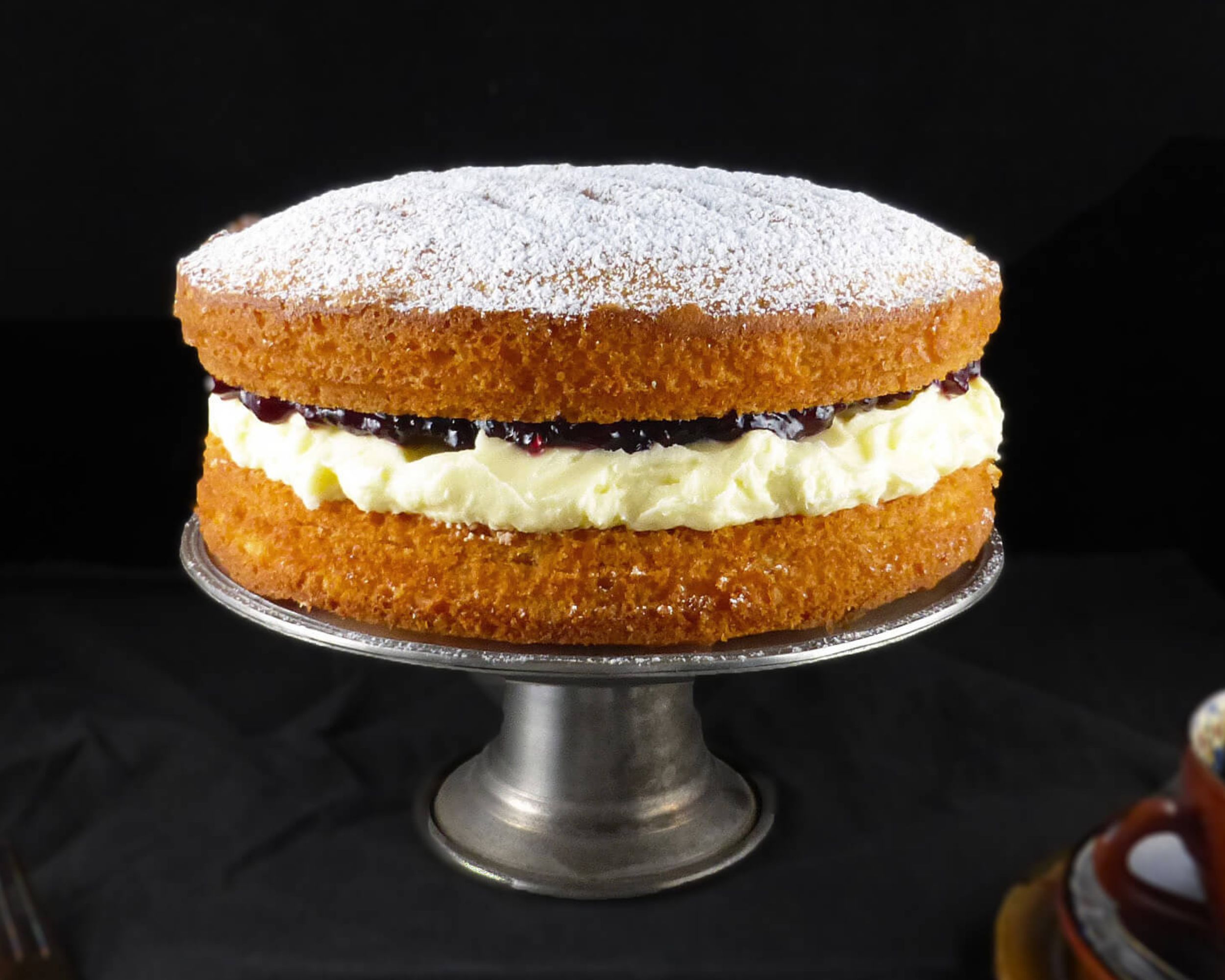
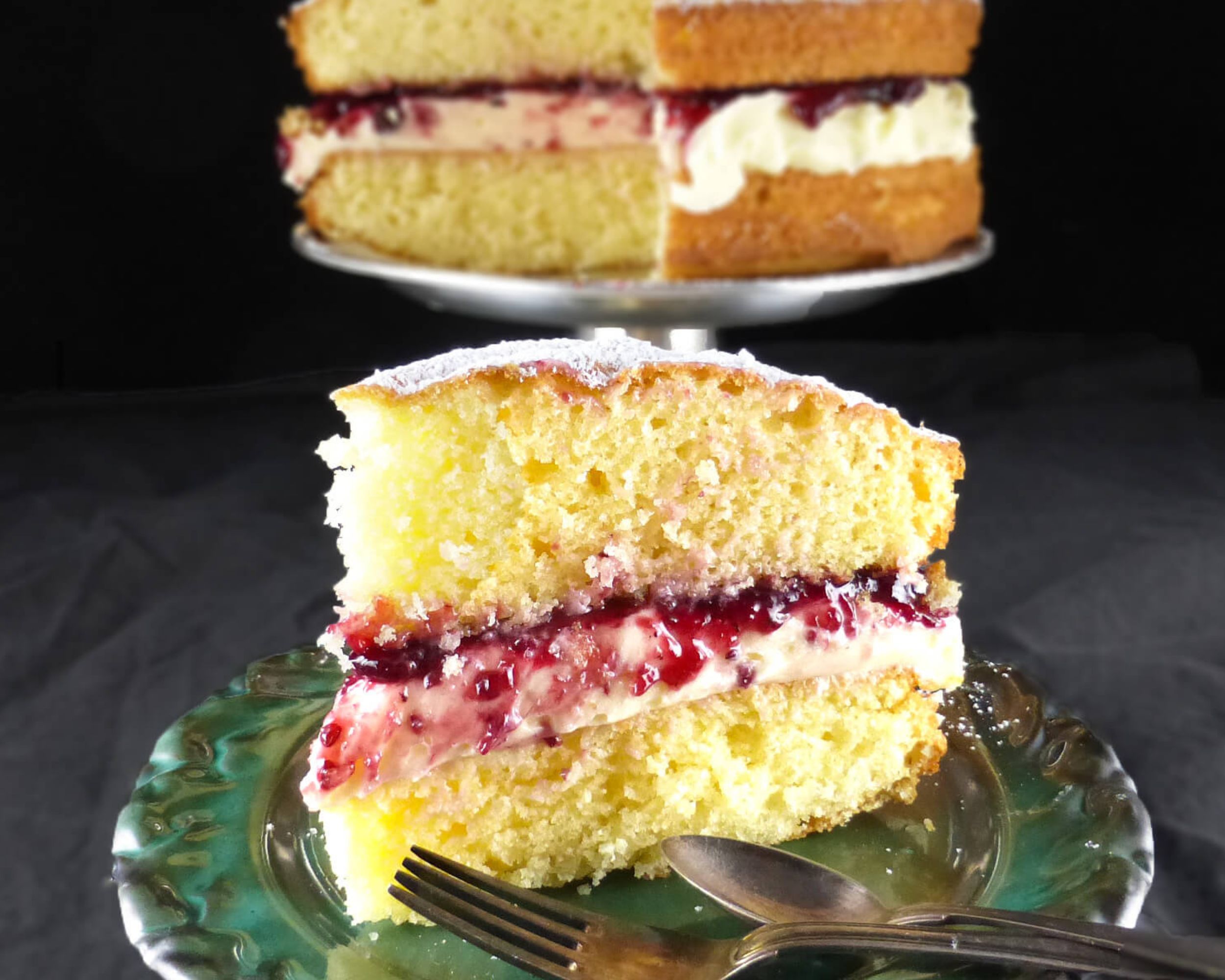
This spelt Victoria sandwich cake is a classic in the UK. The soft sponge is made with only five ingredients, and the two layers are sandwiched together with berry jam and buttercream. You can easily replace the spelt flour with all-purpose flour.
If you’re new to spelt flour and still finding your feet, check out my tutorial: A Beginner’s Guide to Spelt Flour.
|
|
| My spelt Victoria sponge cake |
| What is Victoria sandwich cake? |
| Classic Victoria sponge ingredients |
| Modern takes on the Victoria sponge |
| Spelt flour in cakes |
| More spelt cake recipes |

My spelt Victoria sponge cake
Wow, it’s been a long time, people. Really long. The whole summer has whizzed by and Autumn has plonked itself down with a thump. After three plus years of blogging, I kind of lost my enthusiasm and drive not to mention a change in work meant I just didn’t have the time to not only bake but lovingly document it.
However, sometimes, a break is all we need to make us realise how much we enjoy something. It gives us our passion back. I loved making this easy spelt Victoria sandwich cake. Just five, simple, everyday ingredients for the two cakes that are then layered together with a jam and buttercream filling.
What is Victoria sandwich cake?
Cakes boast a rich, global history, with a well-established place in British baking since the late 17th century. It’s hardly surprising they remain so cherished. The Victoria sandwich cake (often just called Victoria sponge) is one of our favourites, and quite rightly so. Its appeal lies in its simplicity: at its core, it’s just butter, sugar, and eggs, beaten together to create a light, tender sponge.
The cake was named after Queen Victoria, who, like many Brits, had a fondness for cake. As a child, she apparently had limited access to sweet treats, so she made up for it once she could indulge. Historical accounts suggest that Victoria herself would have eaten the sponge plain or with a light dusting of sugar, rather than the layered version with jam and buttercream that became popular later. The simple sponge was often served at afternoon teas or summer fêtes, and over time, bakers began adding jam, and eventually buttercream. This created the richer, layered version we enjoy today.
However, even in its simplest form, the Victoria sponge has a firm place in our hearts.
Classic Victoria sponge ingredients
The classic Victoria sponge uses equal weights of eggs, butter, sugar, and flour. A simple principle that does more than just honour tradition. This balance of ingredients ensures the cake rises evenly and maintains a light, tender texture. The butter and sugar, creamed together, trap air, which expands during baking with the help of the eggs and baking powder, giving the sponge its characteristic airy structure.
This approach of using equal weights may remind some readers of the traditional American pound cake, which is also based on a one-to-one ratio of key ingredients. Like the pound cake, the Victoria sponge is remarkably easy to scale: whether doubling the quantities for a larger cake or halving them for a smaller one, the proportions remain perfectly balanced. In Victorian times, this straightforward method was especially useful, as household scales were becoming more common and cooks valued recipes that delivered consistent results.
Interestingly, the classic Victoria sponge doesn’t include vanilla extract, which is unusual for a sponge cake. While you could add some if you like, it isn’t necessary.
Modern takes on the Victoria sponge
As pointed out earlier, the Victoria sponge enjoyed by Queen Victoria herself would have been much simpler. Perhaps there might have been a dollop of whipped cream by the side, or even some fresh fruit. Since then, the cake has evolved, with bakers adding jam between sponge layers and, more recently, buttercream, giving the cake a richer, more indulgent finish.
Modern recipes often go further, incorporating flavoured syrups, fruit curds, or ganache to add extra moisture and flavour, reflecting contemporary tastes and a love of experimentation. Anyone for chocolate Victoria sponge?
Although we must protect our classic recipes, part of the fun is experimenting and making them your own. That’s exactly what I did when I combined a classic Victoria sandwich with another British favourite, Eton Mess. I baked my Eton Mess sponge cake, then substituted the buttercream for whipped cream. I topped it all off with fresh berries, meringue and a sprinkling of edible flowers.
Spelt flour in cakes
I’ve been experimenting with spelt flour in my baking for a while now, and it’s one of those ingredients that surprises people. While spelt can be a bit tricky in bread, where the dough behaves differently and requires extra care, in cakes it’s completely straightforward. For most recipes, including the Victoria sponge, there’s nothing more difficult than a straight swap for plain (all-purpose) flour.
You don’t need to worry about your sponge collapsing, turning dense or any other kind of weird things happening as a result of the spelt. Spelt flour behaves almost identically to plain flour in cakes, so the texture and rise remain the same. It’s also often easier to digest than regular wheat flour, which makes it a gentle alternative if you’re looking for one.
If you’re curious to see how it performs in a smaller, sweeter format, check out my spelt vs plain flour cupcakes tutorial, where I compare the two flours side by side and highlight any subtle differences in the finished bakes.

Raspberry and blackberry spelt cupcakes
Whole lemon and cottage cheese cake
Spelt Victoria Sandwich Cake
Ingredients
Cake:
- 225g (1 cup + 1 tbsp) sugar
- 225g (1 cup) butter (softened)
- 4 eggs (medium - room temperature)
- 225g (1 cup + ¼ cup + 2 tbsp) spelt flour (see note 1)
- 2 tsp baking powder
Filling:
- 100g (¼ cup + 3 tbsp) butter (softened)
- 100g (¼ cup + 3 tbsp) cream cheese
- 300g (2 cups) icing sugar (extra for sprinkling)
- jam (see note 2)
Instructions
Cake:
- Pre-heat the oven to 180°C (350°F). Grease and line two 8 inch round cake tins.
- Beat the butter and sugar together until light and fluffy (I used a stand mixer).
- Add the eggs, one at a time, beating each one in before adding the next.
- Sift the flour and baking powder together and then gradually add to the wet ingredients (I keep the mixer running). Stop working when the flour is just incorporated.
- Split the batter evenly between the two pans and then bake for around 20-25 minutes, in the lower part of the oven, until the tops feel "bouncy" to the touch and an inserted skewer comes out clean.
- Leave the cakes to cool in their pans for around ten minutes before turning out onto a wire rack.
Buttercream:
- Beat the butter and cream cheese together.
- Sift in the icing sugar and mix until well combined.
Assembly:
- Turn one of the cakes over so that the top is underneath and then spread the jam over the flat surface.
- Do the same with the other cake, this time, spread over the buttercream.
- Place the cakes together (with the jam and buttercream sides touching), and when ready to serve, sprinkle with a liberal helping of icing sugar.
Notes
- You can use any jam you like (and as much as you want).
- You can use regular flour in place of spelt (just use the same amount).


1 thought on “Spelt Victoria Sandwich Cake”