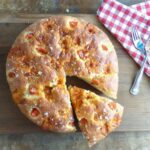
Monterey Pepper Jack Spelt Focaccia Bread (with Tomatoes and Rosemary)
Made with spelt flour and Monterey Pepper Jack cheese, this spelt focaccia bread recipe is studded with tomatoes and flavoured with rosemary.
Ingredients
Dough (see note 1)
- 300ml (1¼ cups) milk
- 20g (1½ tbs) butter
- 1 egg
- 420-470g (3½ - 4 cups) spelt flour (see note 2)
- 40g (1½ oz) Monterey Pepper Jack cheese (chopped into small pieces)
- 7g (2¼ tsp) dried yeast (see note 3)
- 2 tsp salt
- 1 tbs sugar
- 1 tsp oregano
- ½ tsp garlic powder
Topping:
- Approx. 100g (3½ oz) Monterey Pepper Jack (chopped into small pieces)
- a handful of cherry tomatoes (chopped)
- swig of olive oil
- sprinkling of rosemary
- sea salt
Instructions
Bread Machine:
- Add the milk, egg, cheese and butter to your bread machine pan.
- Then add 440g (3⅔ cups) of flour and the remaining dough ingredients. Take care to keep the yeast and salt separate as much as possible.
- Set your machine to make dough.
- On a well-floured surface (the dough will be sticky) work in just as much flour as you need to make a soft, pliable, but still a little tacky, dough.
Stand Mixer:
- Gently heat the milk in the microwave until just lukewarm (around 37–40°C / 100–105°F). Stir in the butter (it will soften nicely).
- Add the egg and cheese to your stand mixer bowl along with the milk mixture, and quickly mix together.
- Then add 420g (3½ cups) of flour along with the remaining ingredients. Mix until combined.
- Gradually add extra flour as needed one tablespoon at a time, allowing it to incorporate fully before adding more. You may not need the full amount stated, or you could need more. Be careful not to add too much, as this will make the bread dense.
- After a few minutes, the dough will start to pull away from the sides of the bowl. You may notice your machine working a little harder (mine starts to make a clumping sound). The dough will still be sticky and will slip easily from the paddle.
- Using a spatula, scrape the dough from the paddle. Add a little more flour and continue kneading until the dough pulls completely away from the sides of the bowl and most of the bottom. It will no longer drip from the paddle but should come away easily when pulled. The dough should feel tacky, but not stick to your fingers.
- Cover the dough and leave it to proof in a warm place until it has doubled in size, usually 60–90 minutes.
- Knock back the dough on a lightly floured surface and form it into a rough ball.
Both methods:
- Grease a small skillet pan with olive oil and place the dough inside.
- Using your fingers, press and manipulate the dough until it has been smoothed out and covers the whole skillet. A good dough will fight you tooth and nail every inch of the way, so if it refuses to cooperate, it’s a great sign. I recommend doing the above, leaving for five minutes, then come back and repeat.
- Using your thumb, press indentations all over the top of your dough.
- Place tiny bits of cheese and tomato in the indentations. Again, a good dough will bounce back quickly, so just make sure everything is pushed into the bread (if your thumb is sticking, use a little flour on it to make the job easier).
- Cover with a tea towel and let the dough rest for a further 15 minutes or so.
- Pre-heat the oven to 220ºC (430ºF).
- Drizzle with olive oil and sprinkle over the rosemary and sea salt.
- Bake in the middle of the oven for around 15-18 minutes. It will be ready when the top is very firm and nice and golden.
- Remove from the oven and allow to cool. Slice then eat warm or cold with your favourite pasta dish or with a barbecue.
Notes
I have converted grams to cups/ounces/tablespoons using online converters. Although I have no reason to believe they are inaccurate, please be aware that I have not made this recipe with imperial measurements.
- I have made the dough using both a stand mixer and bread machine with identical results. I have not made the dough by hand, but I see no reason why you couldn't do so!
- You can use spelt or regular flour for this recipe (just use the same amount).
- In Sweden we have something called dried yeast. It is used both in warm liquid to proof and also added directly to flour. I am aware that the US has two options for dried yeast, and I believe instant yeast is the most similar for the purpose of making this particular bread.
